
The Best Portable Power Stations in Australia
The best portable power stations in Australia for camping and home backup, compared on price at Australian retailers.
 By Laurence Deer
On this page
A storm takes the power out at dinnertime, the fridge starts warming up and every phone in the house is on 12 per cent. Or you’ve booked a campsite with no powered sites and still want lights, a charged phone and something cold to drink. Of the best portable power stations in Australia, buy the EcoFlow DELTA 2 MAX if you want one that can carry the house through a blackout. It’s the biggest battery here, two independent review sites recommend it, and you can add to it later. If it’s mostly for camping, the EcoFlow RIVER 2 Pro costs about a quarter as much and is small enough to carry in one hand.
The short answer
The best portable power stations in Australia
- Best for home backup: EcoFlow DELTA 2 MAX
- Best for camping and best value: EcoFlow RIVER 2 Pro
| Product | Price | ||
|---|---|---|---|
 | EF ECOFLOW Portable Power Station DELTA 2 MAX (DELTA 2 MAX(1900)-AU-NEW) | from $2,499.00 at Amazon | $2,499.00 at Amazon |
 | EF ECOFLOW RIVER 2 Pro (EFR617) | from $629.00 at Amazon | $629.00 at Amazon |
1. Best for home backup: EcoFlow DELTA 2 MAX
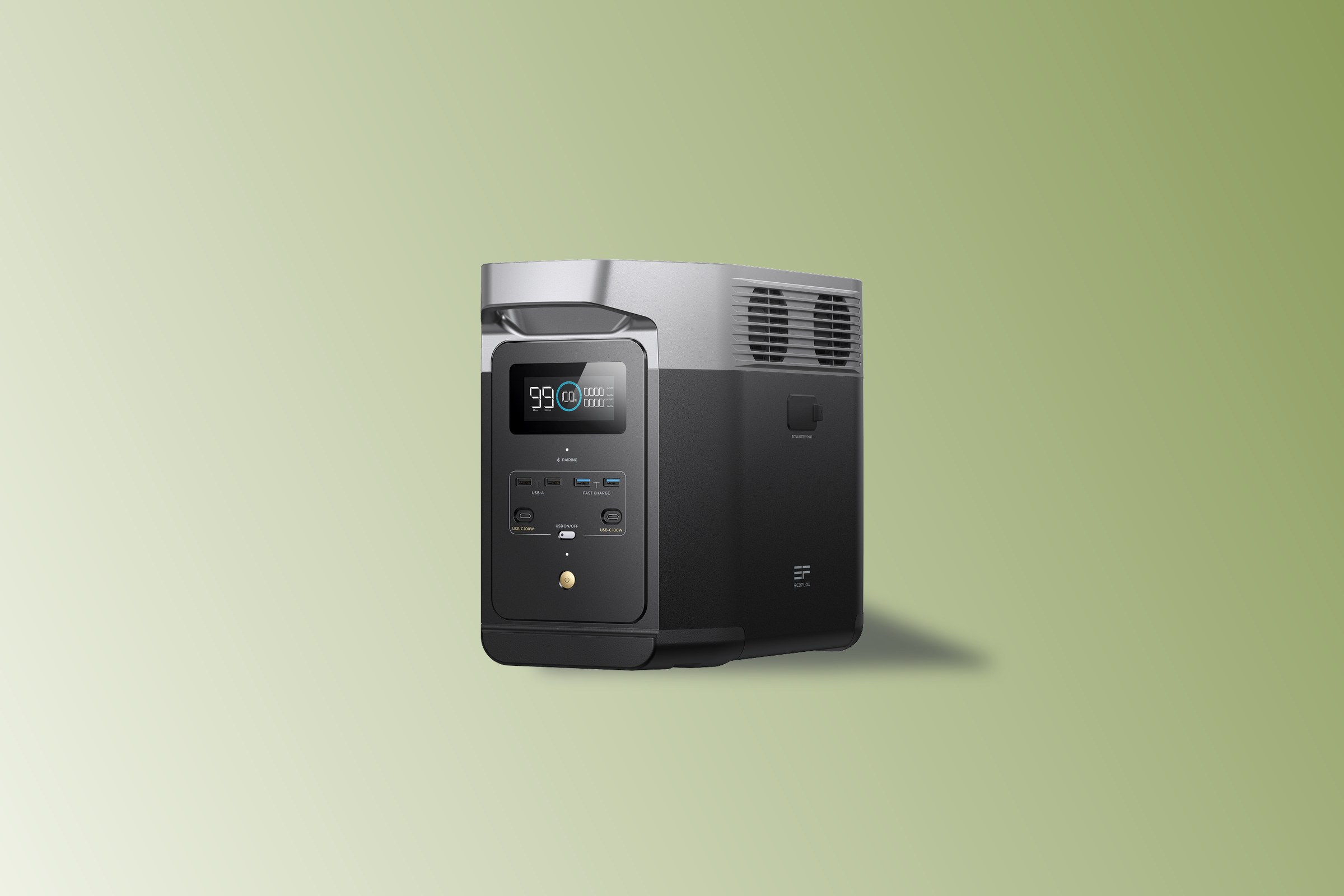
A blackout that lasts a few hours is an annoyance. One that runs overnight means a fridge full of food to throw out. The EcoFlow DELTA 2 MAX is built for the second kind. It has the biggest battery and the highest output in this guide, which means more appliances running at once and running for longer.
EcoFlow quotes 2400W of continuous output across 13 outlets, and says X-Boost mode lets it power high-wattage appliances up to 3100W. In plain terms, 2400W covers a lot of what’s plugged in around a normal house. Read the wattage label on whatever you most want to keep running before you buy.
The other thing that sets it apart is room to grow. The 1900Wh battery can be expanded to about 6kWh with up to two extra batteries, so you can start with one unit and add more if the first long blackout shows you need it. That’s a better plan than paying for 6kWh on day one.
Charging is quick, though the listing gets a bit carried away. The Amazon title promises a “full charge in 1 hr”, but EcoFlow’s own feature list says 80% in 1.1 hours from the wall, or 80% in 43 minutes if you add solar on top. Either way, it’ll top back up between outages. And with charging noise starting at 30 dB, according to EcoFlow, it can sit in the hallway charging overnight without keeping anyone awake.
Bob Vila and StorageReview both recommend it, citing its 2400W output, its long-life LFP battery, expansion to 6kWh and its ability to run full-size appliances for hours. Amazon is the only shop in our data selling it, so read the warranty and returns terms first.
The catch is cost. It’s the dearest pick here by a long way, about four times the price of the RIVER 2 Pro, and the solar panel is extra. If you only need to keep phones charged and a camp light running, don’t buy this one.
Pros
- Highest capacity and output of the two picks
- You can add batteries later instead of buying more up front
- Recharges quickly between outages
- Quiet enough to charge overnight inside
Cons
- Costs about four times as much as the RIVER 2 Pro
- Solar panel and extra batteries are separate purchases
- No owner rating to go on yet
Our verdict: If you want to keep the house running through a long blackout, this is the one to buy. If you mostly camp, the RIVER 2 Pro saves you a lot of money.
- Amazon$2,499.00In stock · as of 3 Nov, 11:16amBuy at Amazon
Amazon price is accurate as of the time shown and can change. Other prices were checked on the retailer's site on the date shown.
2. Best for camping and best value: EcoFlow RIVER 2 Pro
Most camping power needs are small but they don’t stop: phones, a head torch, a speaker, maybe a small appliance at the campsite. The EcoFlow RIVER 2 Pro handles that for about a quarter of the DELTA 2 MAX’s price, and at about 7.8 kg with a built-in handle you can carry it from the car to the tent without a second trip.
The feature that will matter most on a trip is charging. EcoFlow says it fully recharges from a power point in 70 minutes, so you can plug it in while you pack the car on Friday and leave with a full battery. EcoFlow calls this the fastest charging in the industry. That’s EcoFlow’s claim, not ours, but 70 minutes is quick either way. With 220W of solar feeding it, EcoFlow says it can be full again in about 3.5 hours, which makes a longer stay off-grid realistic.
Finder Shopping recommends it as a compact unit for camping and portability, citing its fast charging and LFP battery. Like the DELTA 2 MAX, it’s Amazon only in our data, so the same warranty check applies.
What you give up is battery size. The 700Wh battery is just over a third of the DELTA 2 MAX’s capacity, and EcoFlow’s 1600W maximum output is lower too. It will help through a blackout, but don’t count on it to keep a whole house going overnight.
Pros
- About a quarter of the price of the DELTA 2 MAX
- Light enough to carry with one hand
- Fast recharge from a power point or solar
- Long-life LFP battery
Cons
- Just over a third of the DELTA 2 MAX’s capacity
- Lower maximum output for running big appliances
- No owner rating to go on yet
Our verdict: For camping, the caravan or a backup for phones and lights, this is the one to buy and the better value of the two. If you need to power the whole house, spend more on the DELTA 2 MAX.
- Amazon$629.00In stock · as of 3 Nov, 11:16amBuy at Amazon
Amazon price is accurate as of the time shown and can change. Other prices were checked on the retailer's site on the date shown.
How we chose
This list is based on independent reviews, maker specifications and price and stock checks. We also look for owner ratings, but neither pick has one yet.
- What reviewers say. We note independent review sites that recommend a product, and link to them.
- What the manufacturer states. Capacity, output, outlets and charging times come from the manufacturer’s listings and are credited to the maker.
- What’s left out. Three listings that turned up for this category were cables and chargers for power stations, not power stations, so they aren’t included.
Prices and stock on this page are checked automatically, and the date of the last check is shown on each product. If a pick goes out of stock or something better turns up, it gets replaced.
Portable power station buying guide
Most people buy more battery than they need for camping and less than they need for a blackout. Work out which of the two you’re buying for and the choice gets much easier.
If you want to ride out a blackout
Look at capacity first, measured in watt-hours (Wh). For a rough idea of running time, divide the capacity by the wattage of what you want to run, then expect less in practice. Add up what really matters, like the fridge, a light, the modem and phones, and leave the rest. Then check that the maximum output in watts covers everything you’d run at the same time. If you live somewhere that loses power every storm season, a unit you can add batteries to later is worth paying for.
If it’s for camping or the caravan
Weight and charging matter more than raw capacity. You’ll be carrying it from the car, and you’ll want it full before you leave. Fast charging from a power point helps on the day you go. If you’re staying a few days, check how much solar input it accepts and whether a panel comes in the box. Often one doesn’t.
If you need to run something with a heating element or a motor
Kettles, heaters, hair dryers and power tools draw far more than a phone or a light. Check the wattage on the appliance’s label against the power station’s continuous output. Quoted “boost” or “peak” figures are the maker’s best case, so don’t plan around them.
If you want it to last for years
Look for an LFP (lithium iron phosphate, sometimes written LiFePO4) battery and a quoted cycle count. Both picks here use LFP cells, and EcoFlow quotes at least 3000 cycles before capacity drops to 80% on each.
If you’re shopping on Amazon
Search results for power stations mix in cables, car chargers and power adapters that use the power station’s name in their listing title. Check the photo and price before you add one to your cart, so you don’t end up with a cable when you wanted the power station.
Portable power station FAQs
Is a solar generator the same as a portable power station?
Usually, yes. “Solar generator” is a sales name for a portable power station that can be charged from solar panels. The panel is often sold separately. The DELTA 2 MAX listing, for example, says the panel is optional.
Can I use a portable power station indoors?
A portable power station is a battery, so it doesn’t burn fuel or give off exhaust the way a petrol generator does. That’s a big part of why people choose one for blackouts. Follow the manufacturer’s manual for where to place it and how to charge it.
What size portable power station do I need?
For phones, lights and small gadgets over a weekend away, a unit around the size of the RIVER 2 Pro is plenty. To keep several household appliances going through a long outage, look at something closer to the DELTA 2 MAX, and add up the wattage of what you’ll run before you buy.