
Ninja Luxe Café Premier Review: A Good-looking Coffee Machine That Does Most of the Work for You
Hands-on with the Ninja Luxe Café Premier (ES601ANZ), a compact espresso, coffee and cold brew machine with a built-in grinder and a milk frother that takes most of the guesswork out of a good cup.
 By Laurence Deer
On this page
I’ll start with the obvious: the Ninja Luxe Café Premier (model ES601ANZ in Australia) is a very good-looking coffee machine. Gloss black front, brushed metal dials, a display that only lights up what you need. It looks more expensive than most of what sits near it on the shelf. For a machine with a grinder and a milk frother built in, it’s surprisingly compact, though compact isn’t the same as small: it’s about 33 cm wide and 37 cm high, and it has to sit on open bench, not tucked under a wall cabinet.
It also makes really, really nice coffee, and it gets you there without asking you to become a barista first. That’s the whole appeal. It’s almost automatic, but you still get to feel like you made it.
We bought ours from JB Hi-Fi. Ninja didn’t send it and hasn’t seen this review.
What you get
Everything is in the one unit:
- a coffee grinder on the left, with the bean hopper on top
- the espresso and coffee brewer in the middle
- a milk frother on the right, with its own jug that sits on the base
It also comes with two accessories for the grinding and tamping step: a funnel that sits on top of the basket so the grounds go in and not over your bench, and a metal tamper for pressing them down. Ninja calls it an assisted tamper, and it’s sprung so you get the same press each time.
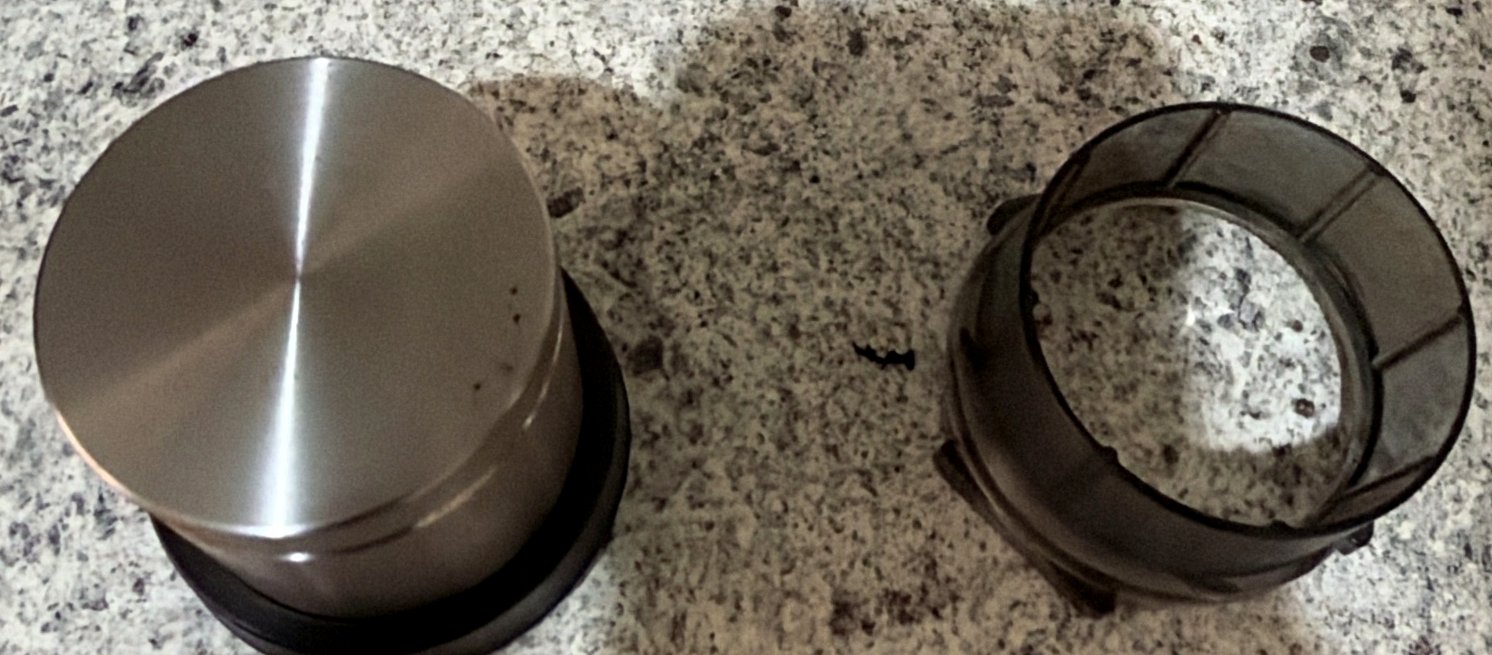
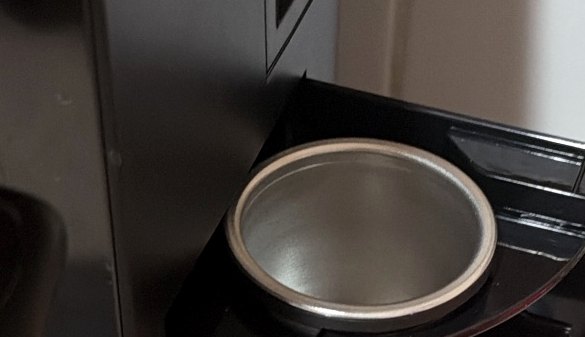
A nice touch is that there’s somewhere to put them. A small holder on the side of the machine stores the bits you’re not using, so they don’t end up loose in a drawer.
According to Ninja’s Australian product page, the box also has a single, a double and a larger “Luxe” basket (the big one is for quad shots and the coffee styles), the milk jug with its whisk, a cleaning brush, a cleaning disc and a water filter insert.
The display is the best part
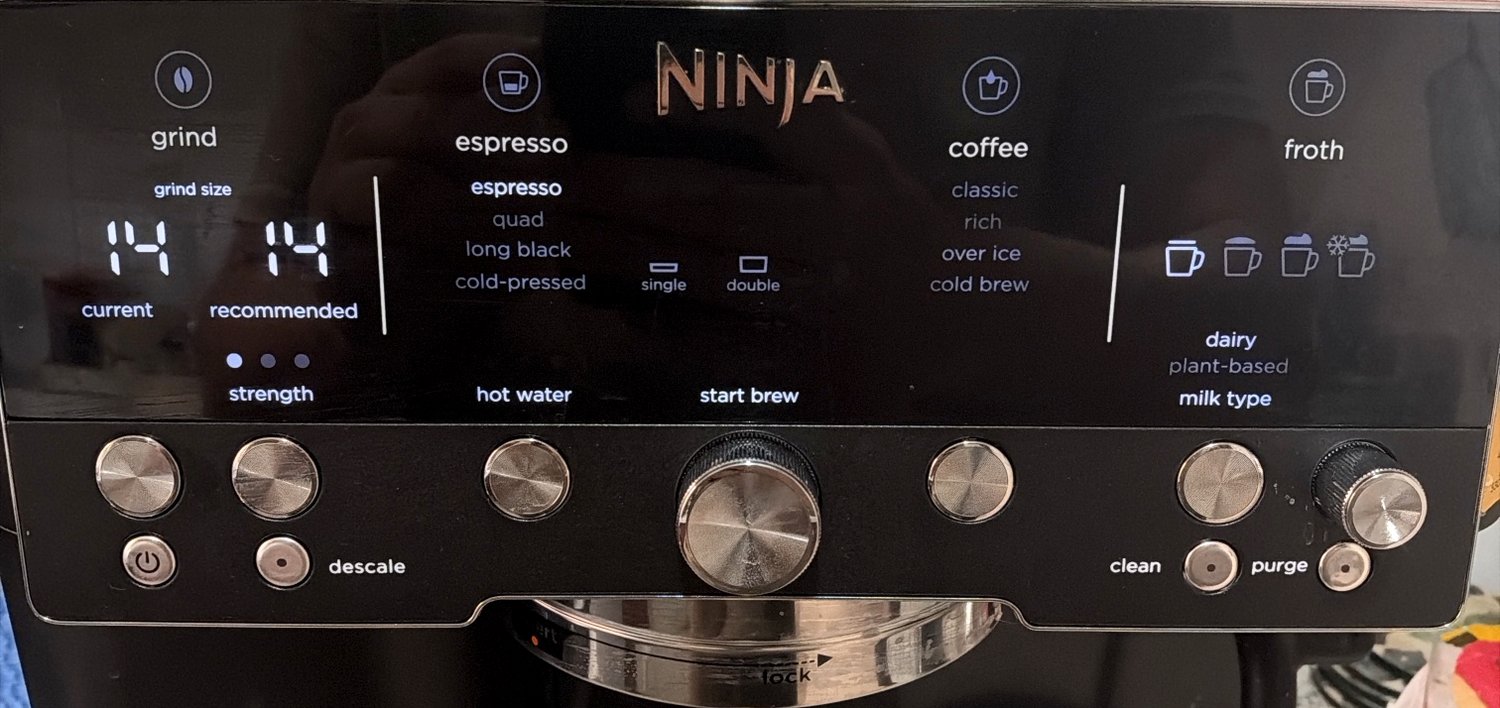
The digital display is very easy to use. It’s split into four sections that follow the order you make a coffee in: grind, espresso, coffee and froth. Each one has its own button underneath, and a big dial in the middle starts the brew.
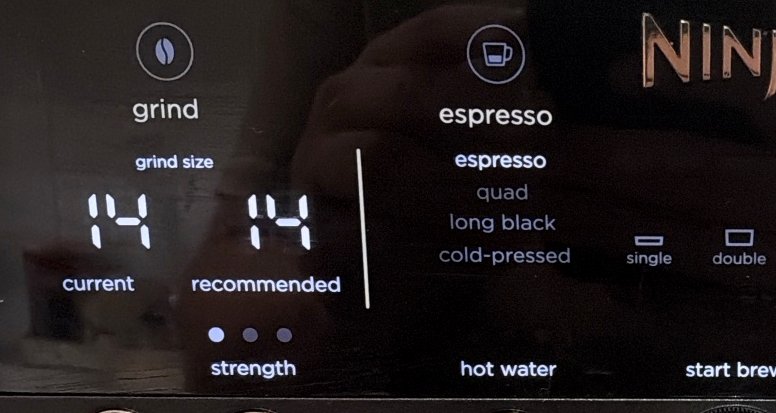
The grind section is the clever bit. It shows the grind size you’re on and the grind size the machine recommends for the beans you’ve put in. On my machine both currently read 14. You can change the grind yourself, and you can change the strength, but if you just follow the recommendation you’ll be close without any trial and error.
There’s a reason the recommendation is good. Ninja’s guide for the Australian model says a built-in scale weighs the grounds for the drink you’ve picked, so the dose is by weight and not by how long the grinder runs. The machine then watches each shot and updates the recommended grind for the next one. Expect to spend your first few coffees on this: the quick-start guide has you run the calibration twice before it settles.
It also gives you feedback while it’s pushing the espresso through, so you can see how the shot is going instead of guessing. If you’ve ever owned a manual machine and wondered why one coffee was great and the next one wasn’t, you’ll understand why that matters.
What it can make
More than I expected:
- Espresso: single or double shots, plus a quad shot, a long black and a cold-pressed espresso
- Coffee: classic, rich, over ice and cold brew
- Milk: four froth settings, including a cold one for iced drinks, and you tell it whether you’re using dairy or plant-based milk
- Hot water: on its own button
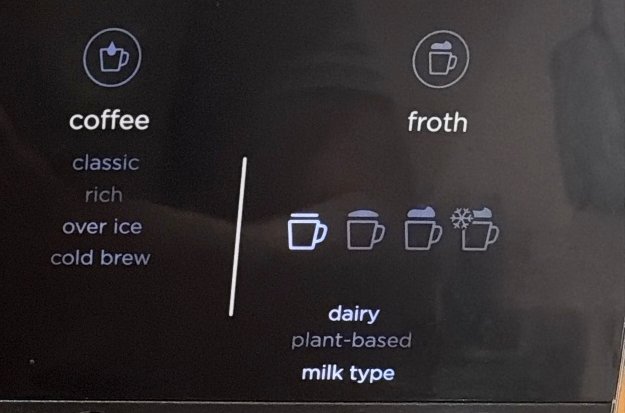
The four froth settings are steamed milk, microfoam, thick froth and cold foam. Ninja’s guide puts the default milk temperature at 72°C for dairy and 69°C for plant-based milk. There are also three brew temperatures to choose from for the hot drinks, and coffee sizes run from 175 mL up to 530 mL.
I’ve tried the coffee and cold brew modes as well as the espresso, and they’re just as good. I half expected them to be the afterthought on a machine like this. They aren’t.
So a flat white in the morning, an iced coffee in the afternoon and a cold brew on a hot day all come out of the same machine. Choosing the milk type is a small thing, but anyone who has tried to froth oat milk the same way as full cream will know it isn’t the same job.
Making a coffee
This is what “almost automatic” means in practice. The machine grinds the beans for you, tells you what grind to use, brews the shot and froths the milk by itself. The parts you still do by hand are the simple ones: pop the funnel on, tamp the grounds, lock the handle in and press start. The funnel is the step that’s easy to skip when you’re half awake, and you’ll know about it when the grounds go everywhere.
Set-up was straightforward. Before your first proper coffee the machine has you run its calibration twice so it can learn your beans, and I didn’t find that fiddly at all. When you switch to a different bag, the recommended grind re-learns over the next shot or two.
Since then it’s been consistent. I haven’t had a shot come out noticeably worse than the one before, and I haven’t had a single leak.
That’s a good balance. A pod machine is easier, but the coffee isn’t in the same league. A fully manual machine can be better in the right hands, but most of us don’t have the right hands at seven in the morning. This sits in between, and the coffee it makes is really, really nice.
Living with it
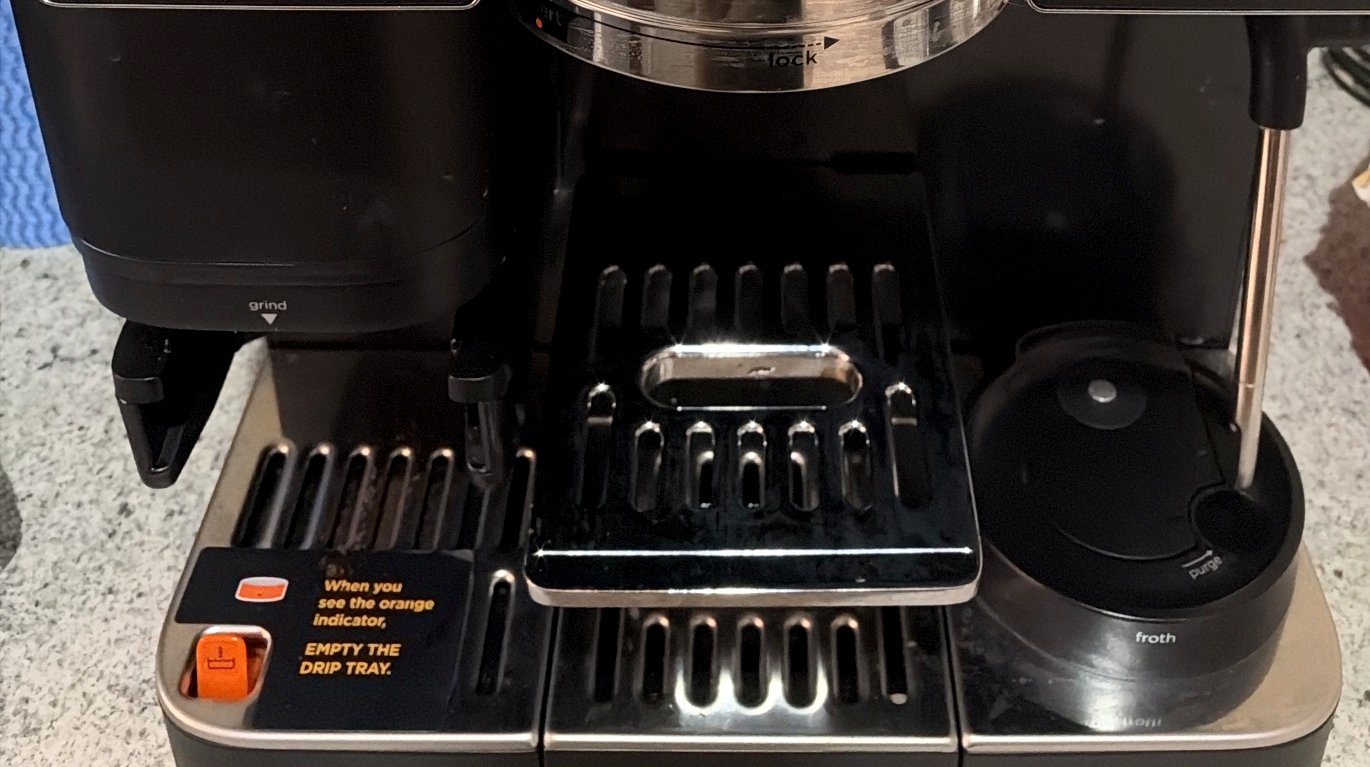
There’s a clean button and a purge button for the frother, and a descale button for the machine itself, so the maintenance is built in and you don’t have to go looking for instructions. An orange indicator pops up at the front when the drip tray needs emptying, which is the kind of reminder I actually need. You’ll see it often, because the tray is small: ours needs emptying after about four or five coffees. That’s my one real grumble.
A few practical things from Ninja’s own guides that are worth knowing before you buy:
- The jug and whisk need a wash after every froth, and the wand wants a wipe before it goes back for its automatic purge.
- Cleaning takes time when it’s due. The tablet clean is about six minutes. A descale is about 90 minutes, so start it when you don’t need a coffee.
- Don’t run it under a wall cabinet. The owner’s guide says not to, so plan on open bench space.
- Cold brew isn’t instant. Allow five to ten minutes, and the machine asks for a rinse when you go straight from a hot drink to a cold one.
- Skip flavoured beans. The added oils and sugars leave more residue to clean.
The specs
| Model | Ninja Luxe Café Premier, ES601ANZ |
| Size | 32.9 cm wide, 34 cm deep, 37 cm high |
| Weight | 11.6 kg |
| Water tank | 2 L, removable |
| Bean hopper | 250 g |
| Grinder | Conical burr, 25 grind settings |
| Milk | Hands-free frother, four presets, dairy and plant-based settings |
| Power | 1,650 W |
| Warranty | 2 years |
| Price | RRP $1,049.99 at Kitchen Warehouse. Ninja’s own site was showing $849.99 when we checked on 14 October 2026. |
Sources: Ninja Australia, Appliances Online and Kitchen Warehouse.
What other reviewers found
I wanted to know whether my experience matched everyone else’s, so I read the main independent reviews of this machine. Mostly it does, and the places where they disagree with me are worth knowing about.
| Reviewer | Score | Liked | Didn’t like |
|---|---|---|---|
| I’mTech (Australian model) | 89/100 | Consistently good espresso, helpful guidance, hot water on tap | Small drip tray that fills after four or five coffees |
| TechRadar | 4.5/5 | Guided grinding and frothing, build quality, value | Takes up a fair bit of bench |
| Tom’s Guide | 4.5/5 | Easy for beginners, automatic frothing, built-in storage | Changing beans is a hassle |
| T3 | 4/5 | Range of drinks, hands-free milk | Fiddly first set-up, easy to forget the funnel |
| WIRED | 7/10 | Scale and grind advice, milk frothing | Inconsistent shots, weaker drip coffee and cold brew |
Where they agree with me. Nearly everyone praises the same three things I did: the guided grinding makes good espresso easy, the automatic frother is a real convenience, and you get a lot of different drinks out of one machine.
Where they don’t. I called it compact, and for a machine that grinds, brews and froths I stand by that. But TechRadar and T3 both describe it as a big unit, and at about 33 cm wide and 37 cm high it does need a clear stretch of bench. Measure first.
How their testing compares with mine:
- T3 and Tech Advisor both found the first set-up and calibration fiddly. I didn’t.
- Tom’s Guide and Tech Advisor found changing beans a hassle, because the grind needs re-tuning. I haven’t had that problem, but it’s worth knowing if you like to swap beans often.
- I’mTech found the drip tray needed emptying after four or five coffees. Same here.
- WIRED had the least positive experience, with shots that varied, the odd leak, and drip coffee and cold brew it didn’t rate. None of that matches mine: my shots have been consistent, nothing has leaked, and the coffee and cold brew have been as good as the espresso.
One thing to watch when you read overseas reviews: several mark the machine down for having no hot water button and no single shot. The Australian model has both. You can see them on the display in my photos.
Owners seem happy. When we checked on 14 October 2026, Kitchen Warehouse showed 4.9 out of 5 from 469 reviews, and Appliances Online 4.6 out of 5 from about 2,100, though that second total includes other colour versions and reviews shared from other sites.
How it compares with the simpler options
The Luxe Café replaces three things we cover separately on the site, so it’s worth knowing what you’d be giving up or gaining.
- Pod machines are cheaper to buy and quicker to use, and there’s nothing to grind or tamp. You pay for it in the cup and in the ongoing cost of pods. If convenience is all you want, start with our guide to the best pod coffee machines.
- Drip filter machines are the easy way to make a big pot for a household or an office. The Ninja’s coffee side covers the same ground for one or two cups at a time. For a dedicated one, see the best drip filter coffee machines.
- A separate grinder and frother make sense if you already own a machine you like. We’ve covered both: automatic coffee grinders and automatic milk frothers. Having them built into one unit is tidier and means one thing to plug in.
If bench space is tight, that last point is the real argument for the Ninja. One compact machine does the job of three.
Who it’s for
Buy it if you want café-style coffee at home, you like the idea of fresh beans, and you’d rather the machine handled the tricky parts. It’s also a good pick if looks matter to you, because it’s a machine you’ll be happy to leave out on the bench.
Skip it if you only ever drink one basic coffee a day and are happy with pods, if you’re the type who wants full manual control over every part of the shot, or if the only spot you have for it is under a wall cabinet.
Scorecard
Verdict
The Ninja Luxe Café is stylish, compact for what it does, and easy to use from the first cup. The display takes the guesswork out of grinding, the frother looks after the milk, and the range of drinks is much wider than most machines this size. The drip tray is too small and it needs open bench space, and that’s about all I can hold against it. Most importantly, the coffee is really good, every time.